
What Is the Difference Between APR and Interest Rate on a Car Loan?
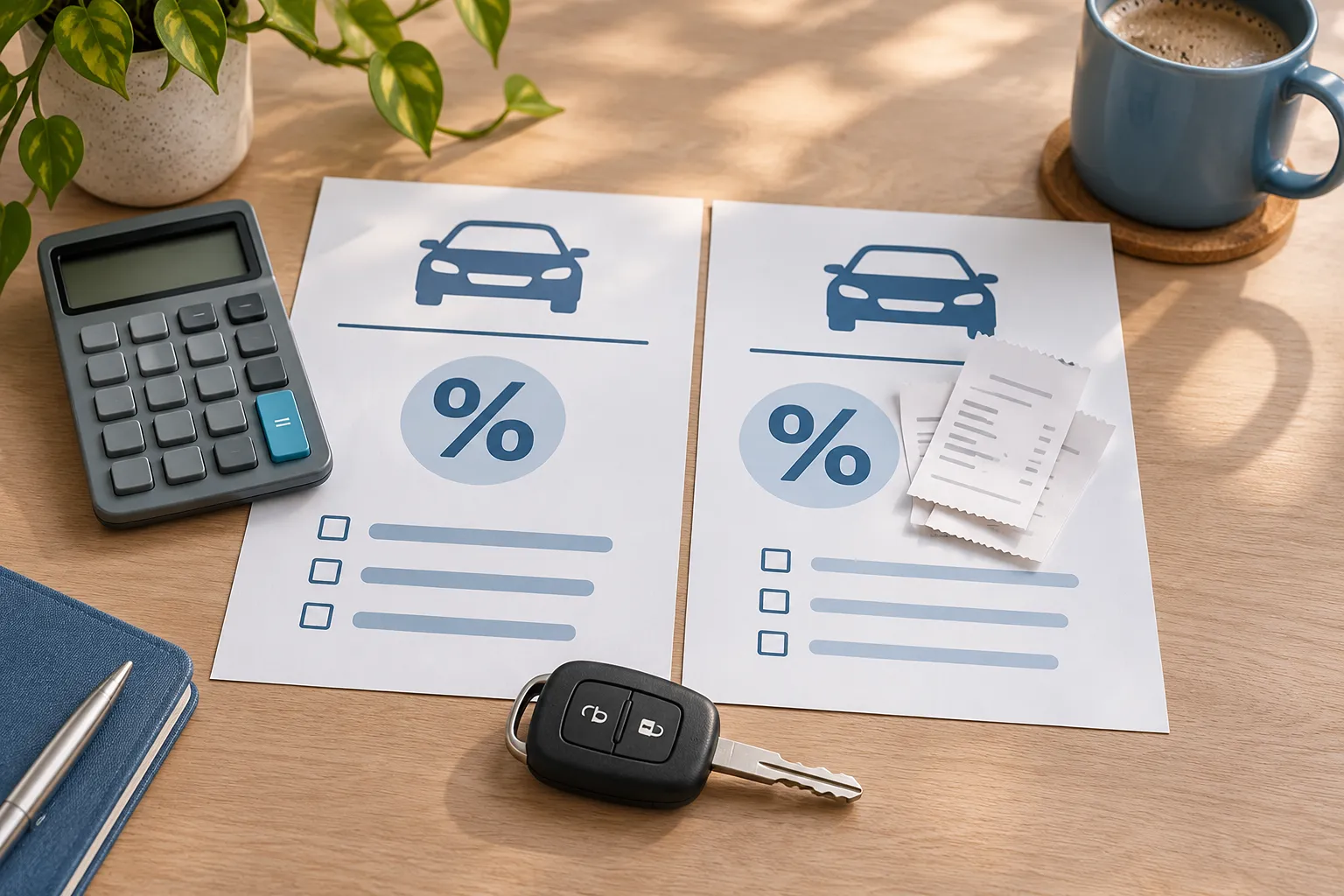
The interest rate is the cost of borrowing the money. The APR, or annual percentage rate, is the interest rate plus certain lender fees, shown as a yearly percentage. That makes APR the better number for comparing car loans. If two offers have the same interest rate but different APRs, the one with the higher APR costs you more. Here is how the two differ on a car loan and what to look for before you sign.
What is the difference between APR and interest rate?
The interest rate is what the lender charges you each year to borrow the principal. The APR takes that rate and adds in required finance charges that are part of the loan, such as certain origination or processing fees, and expresses the total as one yearly figure. Federal law (the Truth in Lending Act) requires lenders to disclose the APR so borrowers can compare offers on equal footing.
Why does the APR matter more when comparing loans?
A low advertised rate can hide fees. APR pulls those fees into the number, so a loan with a slightly higher rate and no fees can come out cheaper than a lower-rate loan with fees. When you compare offers from a bank, a credit union, and a dealer, line up the APRs, the loan term, and the total amount financed.
What does APR not include?
APR does not cover everything you pay when you buy a car. Sales tax, title and registration fees, and the dealer doc fee are separate. Optional products, such as an extended warranty or gap coverage, only count toward APR if they are required as a condition of the loan. Ask for an out-the-door price so you see the full cost, not just the loan terms.
How does the loan term change what you pay?
A longer term lowers the monthly payment but usually means more total interest, even at the same APR. Ask the lender for the total cost of the loan over the full term, not only the monthly payment. If you are weighing a long term, read whether a 72-month car loan is a good idea first.
What affects the APR you are offered?
- Credit history. Stronger credit generally gets a lower APR.
- Loan term. Terms of different lengths are often priced differently.
- Down payment. A larger down payment lowers the amount financed and can help your offer.
- Vehicle age and mileage. Used cars often carry different rates than new ones.
- The lender. Banks, credit unions, and dealer-arranged lenders each price differently, which is why it pays to compare. See dealer financing versus your bank.
How do you get the best APR on a used car?
Get pre-qualified before you shop. Many lenders use a soft credit pull for pre-qualification, which does not affect your score. Then ask every lender for the APR in writing, with the term and amount financed, so you can compare them directly. When you are ready to shop, browse our used car inventory, and see how used car financing in Utah works with Keysy.
FAQ
Is APR the same as the interest rate? No. The APR includes the interest rate plus certain loan fees, so it is usually equal to or higher than the interest rate.
Which is more important, APR or interest rate? APR, because it is the standardized number lenders must disclose and it lets you compare offers fairly.
Can the APR change after I sign? Most car loans have a fixed APR for the full term. Confirm that in your contract.
Does a lower monthly payment mean a lower APR? No. A longer term can lower the payment while costing more in total interest.
Does checking my APR hurt my credit? Pre-qualification often uses a soft pull and does not. A formal application usually triggers a hard inquiry.
More from Keysy Resources
Can You Buy a Car With a Cosigner? How It Works and What It Risks
Buying a car with a cosigner can help you qualify, but both signers take on repayment risk. Learn how it works and what to discuss before signing.
Should You Refinance Your Car Loan? When It Saves Money and When It Doesn't
Refinancing a car loan can lower your APR or payment, but only in the right situation. Here's when it saves money, when it doesn't, and how to compare offers.
Should You Get Car Financing From the Dealer or Your Bank?
Neither dealer financing nor a bank loan is always cheaper. The smart move is to line up an outside offer first, then see whether the dealer can beat it. Here's how to compare them.