
What Does "As-Is" Mean When You Buy a Used Car?
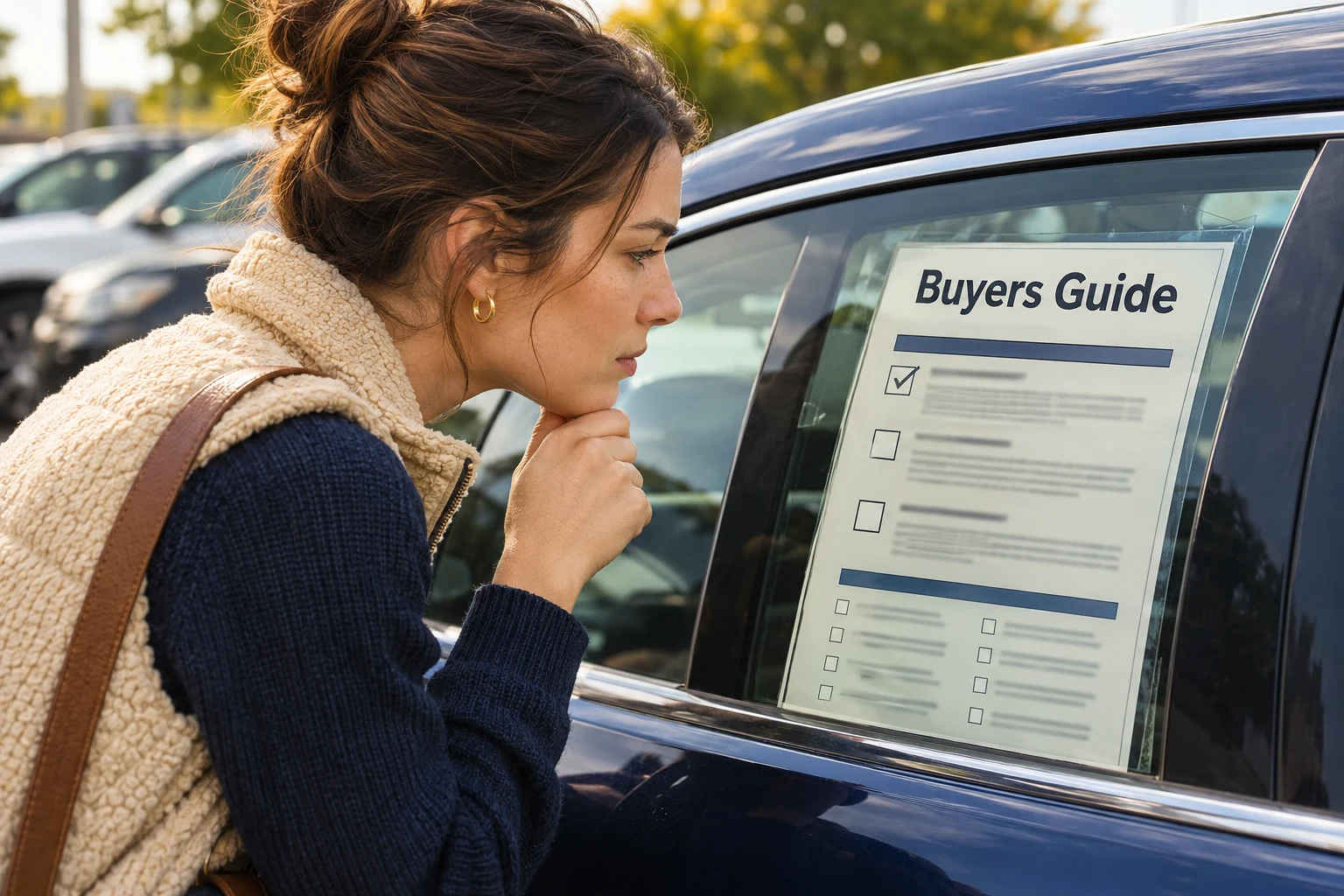
When a used car is sold "as-is," the dealer is not promising to fix anything that goes wrong after you sign. If the transmission fails the next week, the repair bill is yours. Many used cars are sold this way, and it isn't automatically a red flag, but it does mean you need to check the car carefully before you buy.
What does as-is mean on a used car?
As-is means you buy the car in its current condition, with all its faults, whether or not they are known. The dealer is not offering a written warranty, and in most cases the sale also waives the "implied" protections that might otherwise cover a car doing what it should.
How do you tell if a car is being sold as-is?
Look at the Buyers Guide. Federal rules require dealers to post this sheet in the window of every used car they offer for sale. It has two main boxes:
- As Is – No Dealer Warranty: the dealer takes no responsibility for repairs after the sale.
- Dealer Warranty: the dealer lists what is covered, for how long, and what percentage of repair costs it pays.
The Buyers Guide also lists major systems and common problems to watch for, and tells you to ask for a pre-purchase inspection. The guide is part of your sales contract, and it overrides anything to the contrary in the contract, so read it and keep a copy.
Is it risky to buy an as-is car?
It is riskier than buying a car with a warranty, because the cost of surprises lands on you. But risk depends on the car. A well-maintained, lower-mileage car with a clean history report is a very different purchase from an older car with gaps in its records. Price matters too: an as-is car should usually cost less than a similar car with coverage. Compare it against similar listings, as we explain in how to know if a used car price is fair.
How can you protect yourself when buying as-is?
- Get an independent inspection. A mechanic you choose can find problems the dealer may not mention. See whether you need a pre-purchase inspection.
- Pull the vehicle history. Look for accidents, title brands, and service gaps. Our guide on checking a used car's history walks through it.
- Check open recalls. Recall repairs are free at a brand's dealer, even on an as-is car.
- Get promises in writing. If a salesperson says they'll replace the tires or fix a noise, it needs to be in the purchase agreement. A spoken promise is hard to enforce on an as-is sale.
- Keep a repair fund. Set aside money for the first few months in case something comes up.
Can you still get coverage on an as-is car?
Often, yes. As-is only means the dealer isn't covering it. You may be able to buy a separate service contract, though you should read what it excludes before paying. We cover that in should you buy an extended warranty on a used car. Also note that Utah has no automatic right to return a used car after you sign, as explained in our guide to used car returns in Utah, so the decision needs to be made before you sign.
Ready to compare cars? Browse what's available on Keysy's used car inventory and look at the Buyers Guide for each one before you decide.
FAQ
Does as-is mean the car is bad? No. It means the dealer isn't offering a warranty. Plenty of good cars are sold as-is, but you should inspect them closely.
Can a dealer sell a car as-is if it has a safety recall? Yes, but the recall repair is still free through a franchised dealer for that brand. Check the VIN for open recalls before you buy.
Is the Buyers Guide legally required? Yes. Federal rules require dealers to display it on used cars they offer for sale.
What if the salesperson promises something verbally? Ask them to put it in writing in the purchase agreement. If it isn't written down, you will likely have trouble holding the dealer to it.
Can I negotiate the price of an as-is car? Yes. An inspection that finds issues is a reasonable basis to ask for a lower price or for repairs before delivery.
More from Keysy Resources
How Do You Read a Vehicle History Report Before Buying a Used Car?
A vehicle history report shows a used car's title, accident, service and ownership records. Here's how to read one, which entries are red flags, and what it can't tell you.

What Is a Good First Car for a Teen Driver? What to Look For in a Used Car
A good first car for a teen driver is a reliable, midsize used car with modern safety features and modest power. Here's what to look for, what to skip, and how to buy with confidence.
When Is the Best Time to Buy a Used Car?
The best time to buy a used car is when your budget, financing, and research are done. Month-end and seasonal timing can help a little, but they matter far less than being prepared.