
How Do You Read a Vehicle History Report Before Buying a Used Car?
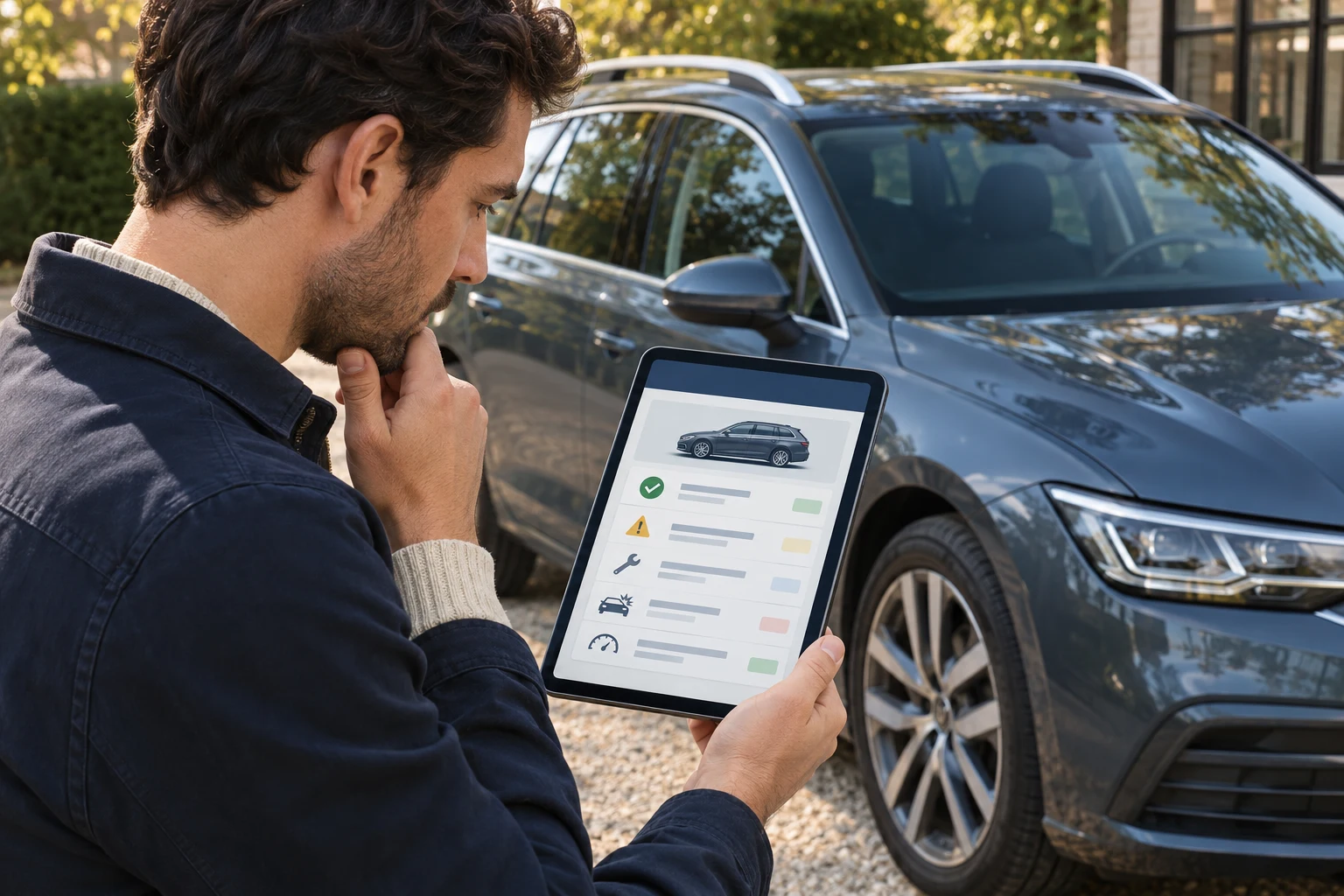
To read a vehicle history report, start with the title section, then check accident and damage records, odometer readings, number of owners, and service history. A clean title with steady mileage and regular maintenance is a good sign. A branded title, a mileage rollback, or a gap in the record is a reason to slow down or walk away.
A report is one of the cheapest ways to screen a used car before you spend time on it. Here's what to look at, in order.
What is a vehicle history report?
A vehicle history report is a record compiled from DMV titles, insurance claims, repair shops, auto auctions, and other reporting sources, tied to the car's 17-character VIN. Carfax and AutoCheck are the best-known providers. Many dealers, including Keysy dealers, can share a report for the car you're considering, so ask for it before you visit or sign anything.
What should you check first on a history report?
Check the title. This is where the biggest problems show up.
- Clean title: no brand recorded. This is what you want.
- Salvage, rebuilt, flood, or junk brands: the car was declared a total loss or seriously damaged at some point. These cars can still run, but they're harder to insure, finance, and resell. Our guide on buying a used car with a rebuilt title covers the tradeoffs.
- Lemon law buyback: the manufacturer took the car back over repeated defects.
- Title issued in several states in a short time: sometimes a sign someone is moving a car around to hide a brand. Ask questions.
How do you read accident and damage records?
Not every entry means the car is a bad buy. Look at the details the report gives you.
- Minor damage with no airbag deployment and a documented repair is often fine.
- Structural or frame damage and airbag deployment are serious. Have a mechanic look at the car before you go further.
- Multiple accidents on one car are worth a closer look even if each was minor.
Remember that only reported incidents appear. If an owner paid a shop in cash and never filed a claim, the report won't show it. That's one reason to pair the report with a pre-purchase inspection.
Do the odometer readings add up?
Scan the mileage entries in date order. They should climb steadily. Watch for:
- A reading that goes down compared with an earlier one, which can point to rollback or a data error.
- A long stretch with no readings followed by a big jump.
- A flag for "odometer problem" or "not actual mileage."
Compare the latest reading with what's on the dashboard. They should be close.
How many owners is too many?
There's no magic number. One or two owners with long ownership periods is the easiest story to trust. A car that changed hands four times in three years deserves a question: why did everyone get rid of it? Also check whether it was a rental, fleet, or ride-share vehicle, since those cars often see heavy use.
Does service history matter?
Yes. Regular oil changes, tire rotations, and scheduled maintenance entries show the car was looked after. Missing entries aren't proof of neglect, because many owners use independent shops or do their own work, but a documented record is a plus. Also check for open recalls separately; see how to check a used car for open recalls.
What can't a vehicle history report tell you?
A report only shows what was reported. It won't tell you the current condition of the brakes, the tires, the suspension, or the engine. It can miss unreported accidents and repairs, and it can lag behind recent events. Treat it as a screening tool, not a guarantee. A test drive and an independent inspection fill the gaps.
What should you do if the report shows a problem?
- Ask the seller to explain the entry and show repair records.
- Get an independent mechanic's inspection.
- Use the finding in price negotiation, or move on to another car.
When you buy a used car online in Utah, asking for the history report up front is a simple way to shop with confidence. You can browse used cars on Keysy and request the report for any car you're interested in.
Frequently asked questions
Is a vehicle history report worth it? Yes. It's inexpensive compared with the price of a car, and it catches title brands and mileage problems that you can't see in photos.
Does a clean report mean the car is in good shape? No. It means nothing bad was reported. Condition still needs a test drive and an inspection.
Can I run a report myself? Yes. You need the VIN, which is on the dashboard near the windshield and on the driver's door jamb. Providers charge a fee per report.
Is one accident a dealbreaker? Not necessarily. A minor, properly repaired accident is common. Structural damage or airbag deployment calls for a closer inspection.
Carfax or AutoCheck? They draw on overlapping but different data, so they can differ. If a car matters to you, a second report is cheap insurance.
More from Keysy Resources

What Is a Good First Car for a Teen Driver? What to Look For in a Used Car
A good first car for a teen driver is a reliable, midsize used car with modern safety features and modest power. Here's what to look for, what to skip, and how to buy with confidence.
What Does "As-Is" Mean When You Buy a Used Car?
"As-is" means the dealer offers no warranty, so you pay for repairs after the sale. Here's how to read the Buyers Guide, what to get in writing, and how to buy as-is with less risk.
When Is the Best Time to Buy a Used Car?
The best time to buy a used car is when your budget, financing, and research are done. Month-end and seasonal timing can help a little, but they matter far less than being prepared.