
How Many Miles Is Too Many on a Used Car?
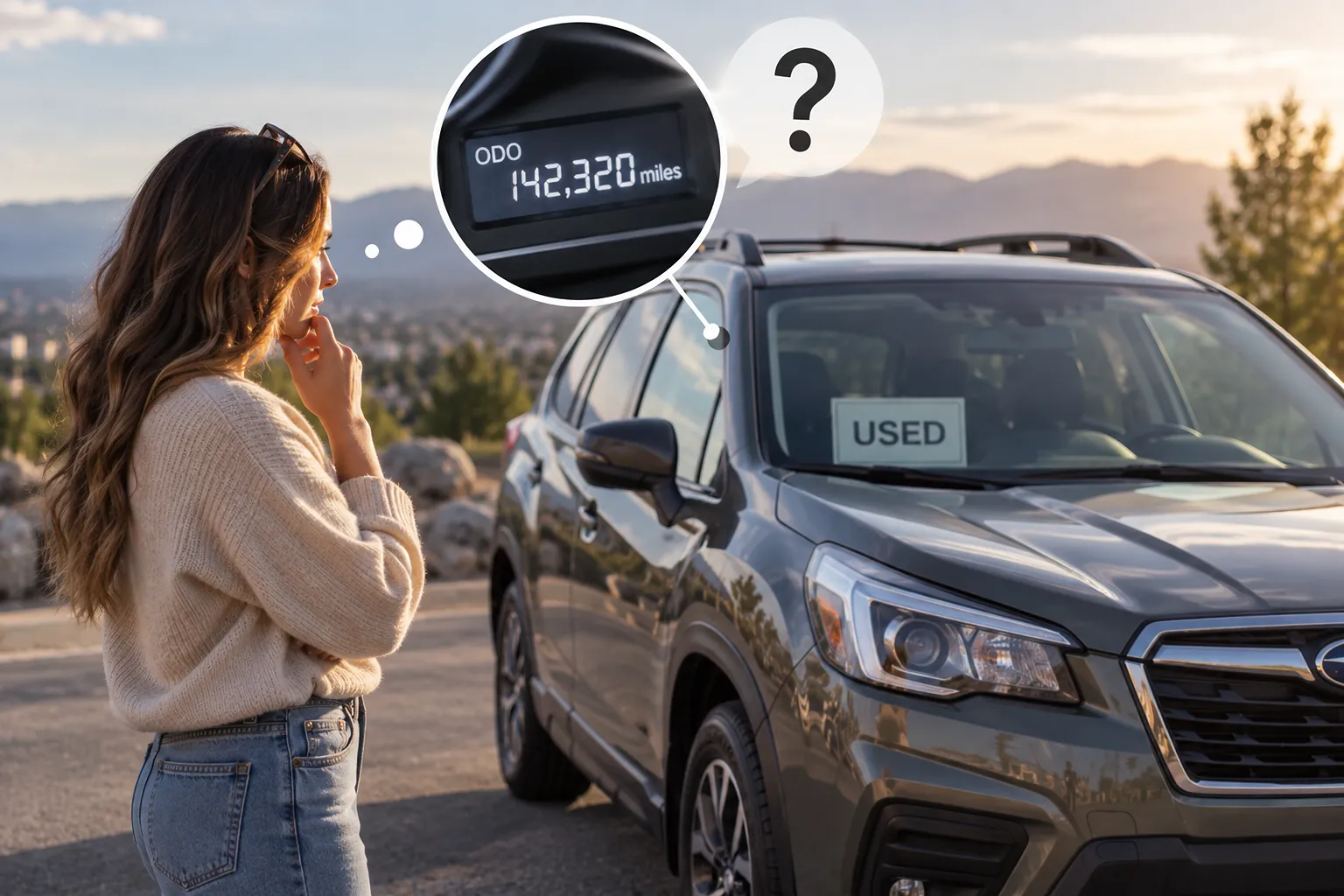
There isn't one mileage number that makes a used car a bad buy. How many miles is too many on a used car depends on how the car was maintained, how old it is, and what you're paying. A well-kept car with 110,000 miles can be a better deal than a neglected one with 70,000.
Is lower mileage always better?
Not always. Low miles help, but a car that sat for long stretches can develop its own problems: dried-out seals, old fluids, and worn rubber parts. Mileage is one signal. Treat it alongside the age of the car, its service records, and its condition.
How do you compare miles to a car's age?
A common rule of thumb is that drivers put on roughly 12,000 miles a year. Divide the odometer reading by the car's age to see whether it's driven more or less than that. A five-year-old car with 40,000 miles is lighter than average; one with 90,000 was likely a commuter or road-trip car.
Highway miles are usually gentler than stop-and-go city miles, so a higher-mileage car that was mostly driven on the highway can be in better shape than the number suggests.
What matters more than the odometer?
- Service records. Regular oil changes and documented major services are the best sign a car was looked after.
- Vehicle history. Check for accidents, title problems, and odometer inconsistencies. Our guide on how to check a used car's history before you buy it walks through it.
- Model reputation. Some models routinely run well past 150,000 miles; others get expensive to keep running earlier. Look up owner-reported reliability for the specific model and engine.
- Condition. Uneven tire wear, worn pedals, or a sagging driver's seat can tell you more than a number.
Should you get an inspection on a higher-mileage car?
Yes. A pre-purchase inspection by an independent mechanic is worth it on any used car, and especially on one with higher miles. Ask them to check the brakes, suspension, fluid leaks, and the timing belt or chain, and to note anything likely to need work soon so you can factor it into the price.
How does mileage affect price and financing?
Higher-mileage cars generally cost less up front, but repair costs can eat into the savings. Some lenders also limit the age or mileage of vehicles they'll finance, so it's worth checking early. Our page on used car financing in Utah explains how approval works, and you can browse current vehicles and their mileage on our used car inventory.
FAQ
Is 100,000 miles too many for a used car?
Not by itself. Many well-maintained cars run reliably far beyond 100,000 miles. Look at the service history and get an inspection before deciding.
What's a good mileage for a used car?
Around 12,000 miles per year is a common benchmark. Notably lower can be a bargain; notably higher should come with a lower price and good records.
Are highway miles better than city miles?
Generally, yes. Steady highway driving causes less wear on brakes, transmission, and engine than heavy stop-and-go driving.
Should I pick a newer car with high miles or an older car with low miles?
It depends on maintenance and the model. Compare records, run a history report, and have both inspected if you can.
More from Keysy Resources

What Happens After You Sign When You Buy a Used Car Online?
Signing is only the middle of an online car purchase. Here's what happens next: pickup or delivery, your first inspection of the car, paperwork, and your return window.
Is a Certified Pre-Owned Car Worth the Extra Cost?
A certified pre-owned car usually costs more than a similar non-certified one, in exchange for an inspection and extra warranty coverage. Here's what CPO covers and how to decide if it's worth it for you.

What Is an Out-the-Door Price, and Why Should You Ask for It?
The out-the-door price is the full amount you pay for a car, including taxes, title, registration, and dealer fees. Here's what's in it, and how to get a straight number before you commit.