
How Do You Read a Used Car Purchase Agreement Before You Sign?
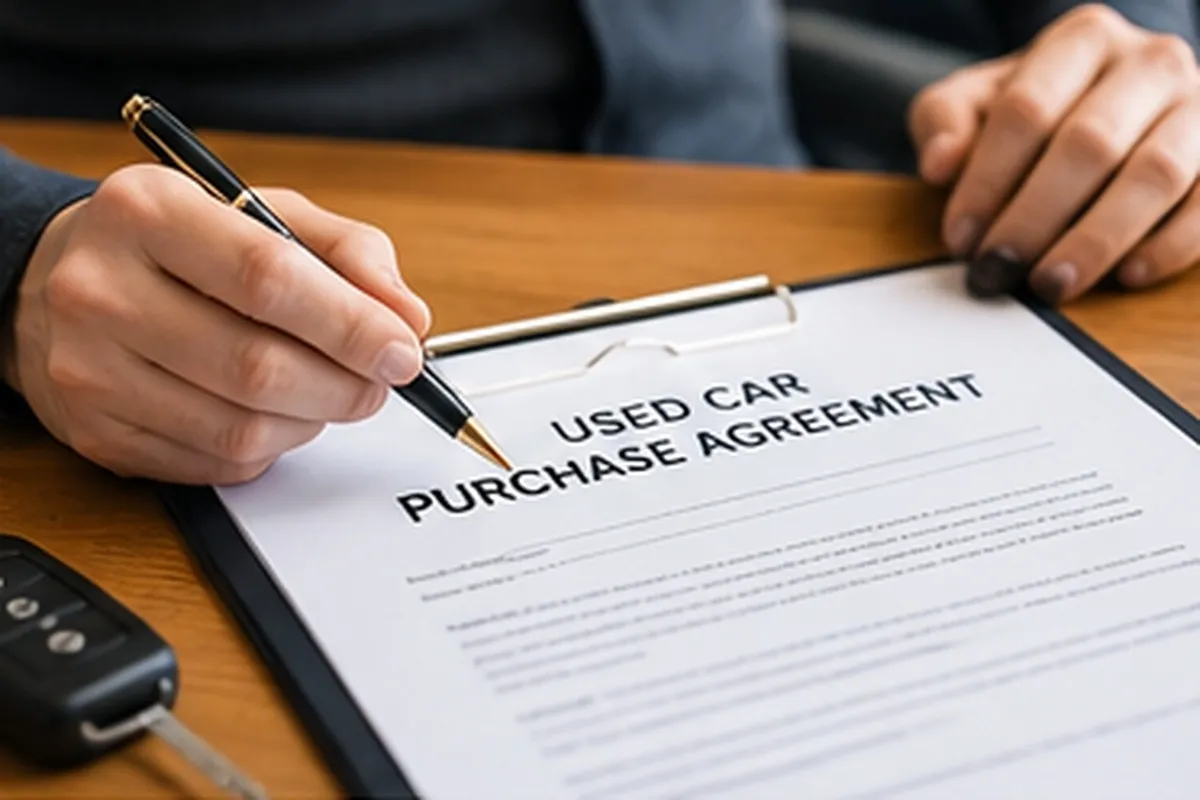
To read a used car purchase agreement, compare every line to the out-the-door quote you were given: the vehicle price, taxes, fees, trade-in value, financing terms, and any add-ons. If a number doesn't match, ask about it before you sign. Signing is a legal commitment, and it's much easier to fix a line item now than after the car is yours.
What is a used car purchase agreement?
A purchase agreement (sometimes called a buyer's order) is the document that lists exactly what you're buying and what you'll pay. It names the car, the price, the fees, and how the deal is being paid for. If you finance, a separate loan contract spells out the interest rate and payment schedule, and the two should agree with each other.
What should you check about the vehicle itself?
Start with the basics, because errors here cause real headaches later with title and registration.
- VIN: Match it to the number on the car's dashboard or door jamb and to the history report you reviewed.
- Year, make, model, and trim: Make sure they match the listing.
- Mileage: The odometer reading should be close to what you saw when you inspected or test drove the car.
- Condition terms: Note whether the car is sold as-is or with a warranty, and that any promises made in the listing are written down.
How do you check the price and fees?
The number that matters is the total you pay, not the sticker price alone. Look for the vehicle price, sales tax, title and registration charges, and the dealer documentation fee. Add them up and compare the total to the quote you were given. Our guide to the out-the-door price explains what belongs in that total. Any fee you don't recognize is worth a question.
What should you look for with a trade-in?
If you're trading in a car, the agreement should show the trade-in allowance and, if there's a loan on it, the payoff amount. Confirm the allowance matches what you agreed to and that the payoff is being handled by the dealer. If you owe more than the car is worth, that difference may be rolled into your new loan, which raises what you finance.
How do you review the financing terms?
If you're financing, check the amount financed, the interest rate, the loan length, and the monthly payment. Make sure the rate matches the approval you were given. A longer term lowers the payment but usually costs more in interest overall. Our post on whether a 72-month car loan is a good idea walks through that trade-off.
What about add-ons like warranties or GAP coverage?
Optional products should be listed as separate lines with their own prices, and they should be there only because you chose them. Extended warranties, GAP coverage, and similar products can be worth it for some buyers, but you aren't required to buy them to get the car. If something appears that you didn't ask for, ask for it to be removed and the totals updated.
How does this work when you buy online?
When you buy a used car online in Utah, you can review the agreement on your own screen and take your time before e-signing, instead of reading it across a desk. Use that time. Read each page, compare it to your quote, and message the dealer about anything that looks off. You can browse cars and see pricing on our used car inventory.
Frequently asked questions
Can I take the purchase agreement home before signing? You can ask for a copy to review, and when you buy online you can usually read it before you sign. If a dealer rushes you, that's worth noticing.
What if the numbers don't match my quote? Don't sign. Ask the dealer to explain each difference and to correct the agreement if it's wrong.
Is a purchase agreement the same as a loan contract? No. The purchase agreement covers the sale of the car. The loan contract covers the financing. Check that they agree on the amount financed.
Do I have to buy add-ons? No. Optional products such as extended warranties and GAP coverage are your choice.
What should I keep after signing? Keep copies of the purchase agreement, loan contract, and any warranty paperwork.
More from Keysy Resources
When Is the Best Time to Buy a Used Car?
The best time to buy a used car is when your budget, financing, and research are done. Month-end and seasonal timing can help a little, but they matter far less than being prepared.
Is a Used Electric Car Worth Buying? What to Check First
A used electric car is worth buying when the battery is healthy, you can charge at home, and the price reflects the car's age and mileage. Here's how to check each one before you sign.
Is a Used Hybrid Worth Buying? What to Check Before You Sign
A used hybrid is worth buying when the hybrid battery is healthy, the maintenance history is clean, and your driving habits let you capture the fuel savings. Here's how to check each one.