
The Hidden Cost of a Paper Deal: What Dealerships Are Losing Per Transaction
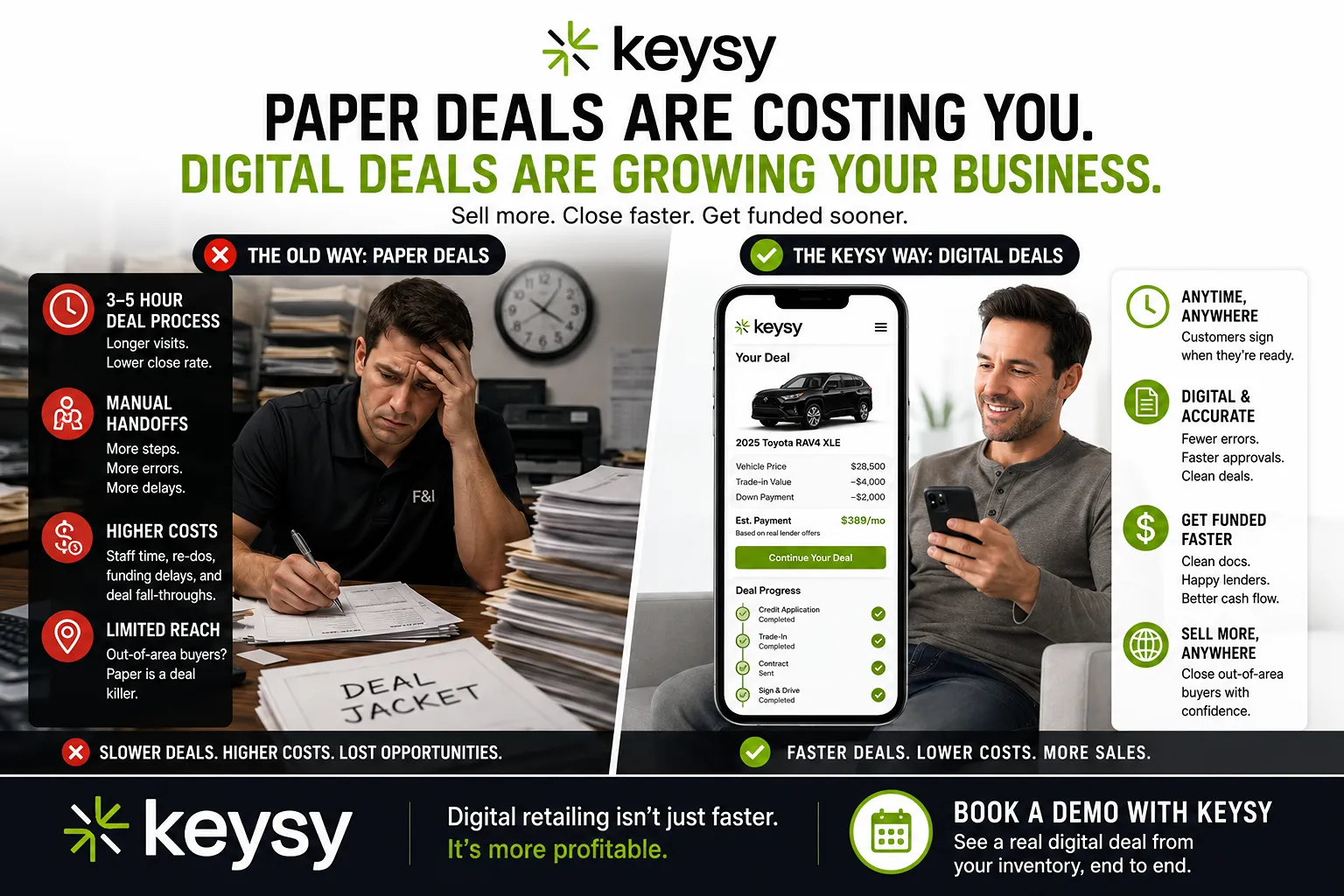
Most dealers know paper deals are slow. What most dealers don't know is just how much that slowness is actually costing them.
Not in some vague "efficiency" sense. In real dollars, per deal.
We've spent time on the floor selling cars ourselves, so we've lived this from both sides. Here's what the math actually looks like.
The Clock Starts the Moment a Customer Sits Down
The average dealership visit still runs three to five hours. That number hasn't moved much in years, and the finance office is a big reason why.
Think about what happens inside a paper deal: a sales manager builds numbers on a desk, a finance manager prints a credit application, somebody walks the deal jacket down the hall, a lender gets faxed (yes, faxed), contracts get printed, the customer signs a stack of documents, someone makes copies, and then the whole jacket goes into a drawer to get mailed somewhere later.
Every one of those steps is a handoff. Every handoff is a chance for a delay, an error, or a deal to fall apart.
Now multiply that by the number of deals you close in a month.
What It's Actually Costing You
Here are the costs most dealers aren't adding up:
Staff time. A finance manager handling a paper deal is tied up for 45 minutes to an hour longer than a digital deal. That's not time spent selling products. That's administrative work a $90k/year employee is doing manually. At a 200-unit store doing 30% finance penetration, that's a meaningful chunk of manager capacity gone every single month.
Deal fall-through rate. Paper deals that go home "to think about it" close at a significantly lower rate than deals where the customer signs digitally while they're still emotionally in it. The further a customer gets from the dealership, the more their enthusiasm cools and the more their spouse talks them out of it.
Errors and redos. A missed signature or a field filled in wrong on a paper contract means the whole thing has to be reprinted, sometimes redone with the customer present. In a digital deal, a missed signature is a one-click reminder.
Funding delays. Lenders require clean paperwork. Messy paper deals go to a "needs correction" pile. Every day your deal sits in that pile, you're not getting funded. At today's floorplan rates, that's real money.
Out-of-area deals you're not closing at all. This one is the biggest missed opportunity of all. If a customer finds your vehicle on Autotrader from two states away, paper is a complete non-starter. You either figure out a digital process or you lose that deal to a dealer who has one.
The Staffing Problem Nobody Talks About
Here's something that rarely shows up in the ROI calculator: paper deals require bodies in the building.
A customer can't sign at 9pm on a Sunday if your finance manager went home at 6. They can't sign from their couch while they think it over. They can't have their co-buyer sign from a different city.
A digital deal doesn't care what time it is. It doesn't care where your customer is. It just sends a DocuSign link and waits.
For smaller dealers especially, this changes the math on staffing in a real way. You don't need an F&I manager hovering for every deal if the deal can move forward without them being physically present.
"But Our Customers Prefer Paper"
We hear this one a lot. Here's what the data actually says.
According to Cox Automotive, 65% of car buyers in 2026 would complete some or most of the purchase process online if given the option. The dealerships reporting the highest customer satisfaction scores are the ones that have moved the most steps digital.
The customers who say they prefer paper? Most of them have never seen a digital deal done well. They've seen clunky PDFs and wet signature requirements dressed up as "digital." A real digital deal, where you build the numbers together, submit financing, and sign everything from your phone, is a fundamentally different experience.
What a Real Digital Deal Looks Like
When a deal runs through Keysy, here's what changes:
The customer builds their own deal online, with real payments based on real lender programs. They submit their credit application, upload their driver's license, and get a soft pull credit check without ever setting foot in your store. If they have a trade, they submit it. If they need to verify their identity, they do it on their phone.
When the numbers are agreed on, contracts go out through DocuSign. The customer signs on any device, from anywhere. The deal jacket is complete, clean, and fundable.
Your finance manager's job shifts from data entry and paper shuffling to product presentation and relationship building, which is what they should be doing anyway.
The Bottom Line
Paper deals aren't just slow. They're a ceiling on how many deals you can close, how fast you can get funded, and how far your reach actually goes.
Digital retailing used to be a nice-to-have. In 2026, with buyers expecting to complete most of the process before they ever show up, it's the cost of doing business at full capacity.
If you want to see what a digital deal looks like end to end, we'll show you on a real deal from your own inventory.
Keysy is an automotive SaaS platform that helps dealerships sell vehicles fully online, including deal-building, financing, digital contracting, and F&I. Built by people who actually sell cars.
More from Keysy Resources
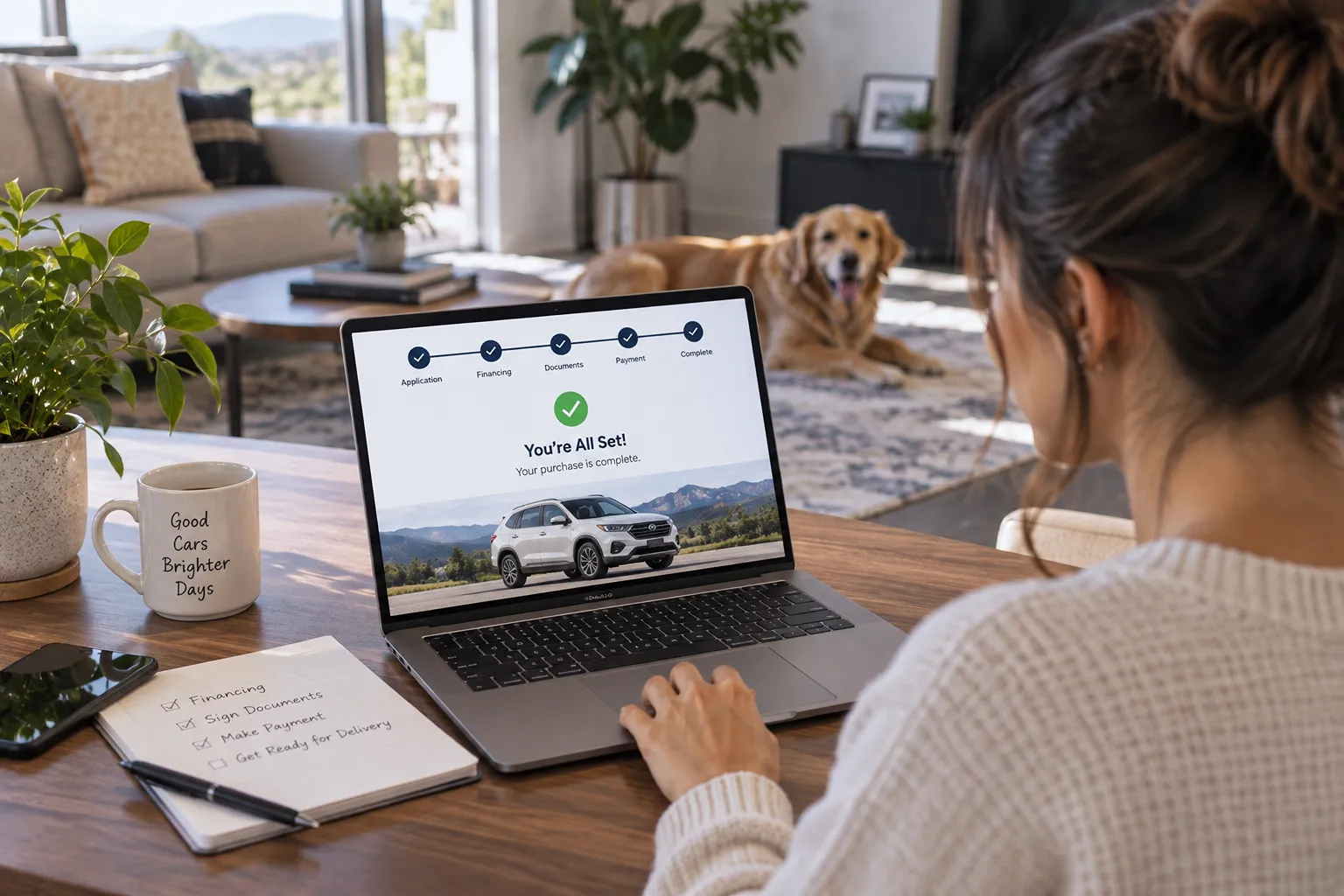
What Happens After You Sign When You Buy a Used Car Online?
Signing is only the middle of an online car purchase. Here's what happens next: pickup or delivery, your first inspection of the car, paperwork, and your return window.

Is a 72-Month Car Loan a Good Idea?
A 72-month car loan lowers your monthly payment, but you pay more interest and stay underwater longer. Here's the math on loan length and how to pick a term you can live with.
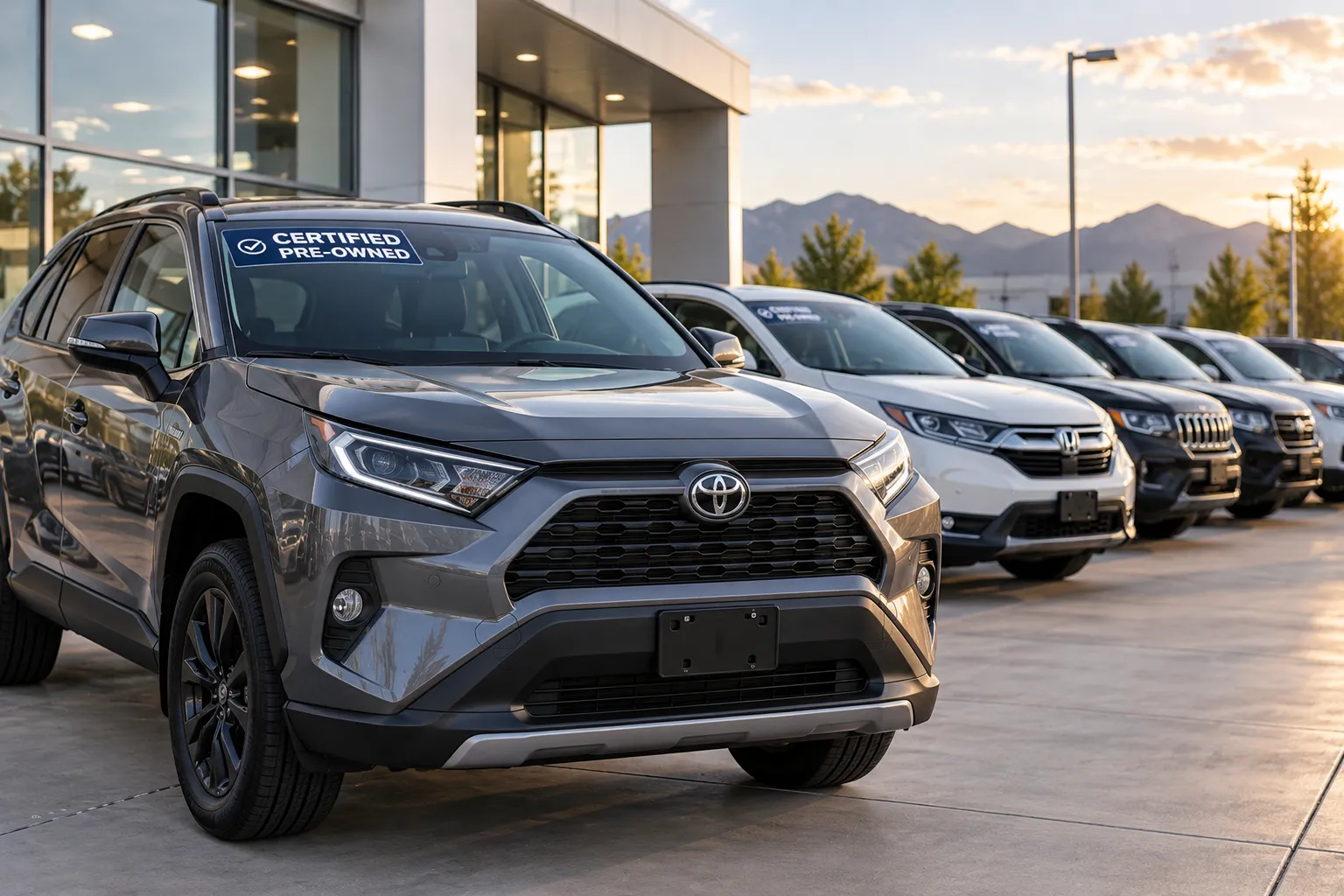
Is a Certified Pre-Owned Car Worth the Extra Cost?
A certified pre-owned car usually costs more than a similar non-certified one, in exchange for an inspection and extra warranty coverage. Here's what CPO covers and how to decide if it's worth it for you.